Loading...
Serving Twentynine Palms, CA and surrounding areas. (442) 214-8850
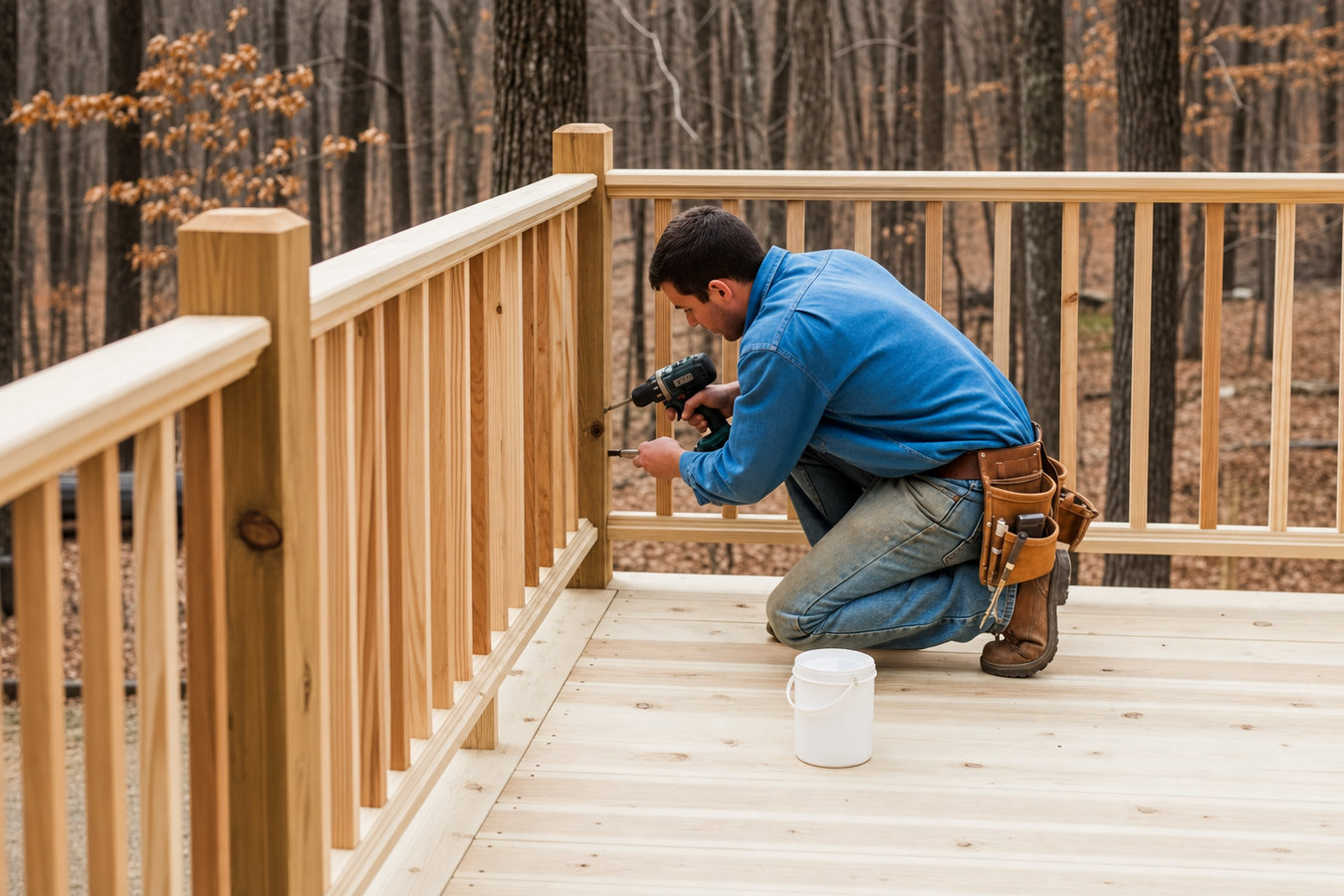
A railing that wobbles, splinters, or rattles in the Mojave wind is not just an eyesore - it is a safety issue. We install railings anchored for High Desert wind loads and built to California safety standards, with full permit handling from start to final inspection.
Deck railing installation in Twentynine Palms means removing any existing railing, setting new posts into the deck frame, attaching horizontal rails, and installing balusters to California height and spacing standards - most residential jobs take one to two days of physical work, plus one to three weeks for the permit process before work begins.
In Twentynine Palms, the desert climate makes railing maintenance more demanding than homeowners expect. Wood railings that look fine during the first summer can start graying, cracking, and splintering within a few years because the Mojave UV index is among the highest in the continental United States. If your railing is showing those signs, it is not just cosmetic - the wood fibers have degraded, and no amount of paint or stain will restore their structural integrity. The right time to replace is before someone leans on it and it gives way, not after.
Railing installation is often paired with other deck work. If your deck surface also needs attention, our multi-level deck service builds railings into the structure from the start, which is more cost-effective than adding them separately after the fact.
Stand at the edge of your deck and push firmly on the top rail or a post. If it moves more than slightly, the connection between the post and the deck frame has weakened. This is a safety issue, not just a cosmetic one - a railing that gives way under pressure can cause a serious fall, especially on an elevated deck.
In the Mojave Desert's intense sun, wood railings lose their protective finish faster than in most other climates. When the wood turns gray and starts to crack or splinter, it is past the point where a coat of paint or stain will fix it. At that stage, the wood itself has been damaged by UV exposure and the railing needs to be replaced, not refinished.
Stand back and look at the spacing between the vertical pieces. If you can fit your fist through the gap, the spacing is too wide to meet current safety standards. Railings installed before modern requirements were in place often have this problem, and it is a real risk if you have young children or grandchildren visiting.
Look at where the posts connect to the deck frame. If you can see a gap opening up, or if the post base looks like it is lifting, the fasteners have likely corroded or the wood around them has deteriorated. In the desert heat, metal fasteners in wood can expand and contract repeatedly over years until the connection fails - a common finding on decks more than 10 to 15 years old in this region.
We install deck railings from material selection through final permit inspection. That means confirming your permit jurisdiction before we pull a single document, selecting post anchoring hardware sized for High Desert wind loads, and setting every baluster to California's 4-inch maximum spacing requirement. We do not surface-mount posts with undersized hardware - posts are bolted through the rim joist or set into the deck structure itself so they hold firm when someone actually leans on them.
For homeowners who are doing broader deck work at the same time, railing installation pairs naturally with our multi-level deck builds and with our custom deck design and build service, where railings are planned and permitted as part of the original structure rather than added later.
Suits homeowners who want a low-maintenance option that holds its color and integrity for decades under intense Mojave UV without painting or staining.
Suits homeowners who want the warm look of wood without the desert maintenance burden - composite materials are rated for high-UV environments and resist fading.
Suits homeowners with a tighter upfront budget who are prepared to repaint or restain every few years to keep up with the desert sun's effect on natural wood.
Suits homeowners who want to preserve a view from their elevated deck while still meeting California safety requirements for railing height and load.
The Mojave Desert puts pressure on outdoor structures that contractors from coastal markets are not always prepared for. Summer temperatures that regularly exceed 110 degrees cause metal fasteners to expand and contract through daily heat cycles, gradually working loose from their anchor points. Wood posts lose moisture and shrink, leaving gaps around hardware that looked tight when it was installed. Aluminum and composite systems built for these conditions outlast standard wood installations by years in this climate, and the upfront cost difference pays for itself quickly in avoided repairs.
The permit side is also more complicated in this area than in a single-jurisdiction city. Some Twentynine Palms addresses fall under the city building department, others under San Bernardino County - and the two have different offices, fee schedules, and inspection timelines. We confirm your jurisdiction before we do anything else, so your project stays on track and there are no surprises. We serve the full High Desert region, including Morongo Valley and Landers, where the same desert conditions and county permit questions come up on every job.
We ask a few basic questions - deck perimeter length, deck height, and what material you are interested in. We reply within one business day to schedule a site visit, since the condition of your existing deck frame affects how the new railing gets installed.
We visit your deck, measure, check the frame condition, and confirm which jurisdiction handles permits for your address. This visit usually takes 30 to 60 minutes and is the point where you can look at material samples and ask questions.
We pull the building permit before work begins. Whether that is through the City of Twentynine Palms or San Bernardino County, we handle the paperwork. Plan for one to three weeks for review - we keep you updated throughout.
Most standard railing jobs are completed in one to two days. We remove the old railing, anchor the new posts, attach the rails, and install the balusters. A city or county inspector visits after installation. Once the inspection passes, we do a final walkthrough and you get documentation that the work is approved.
We will visit your deck, confirm your permit jurisdiction, and give you a written quote - no obligation and no sales pitch.
(442) 214-8850The Mojave Desert gets strong, sustained wind events - particularly in spring - that put real stress on deck railings. We anchor posts with hardware and connection methods sized for local wind conditions, not just the minimum that would pass inspection in a calmer climate. Your railing will feel solid and stay quiet even on the gustiest days.
Many Twentynine Palms homeowners do not realize their property falls under San Bernardino County rather than the city. We confirm your jurisdiction as the first step of every project - before we pull a permit, order materials, or schedule a crew. That avoids the delays and complications that come from pulling the wrong permit.
We help you choose railing materials - aluminum, composite, or treated wood - that are matched to the intensity of the Mojave climate. A railing that holds up in Seattle will not necessarily hold up here, and we have seen what happens when that mismatch is not caught early. You get a recommendation based on how long materials actually last in this environment.
A failed inspection means delays and extra trips. Because we build every railing to California's current safety requirements - 42-inch minimum height on elevated decks, 4-inch maximum baluster spacing - our installations pass inspection without rework. The California Contractors State License Board requires licensees to meet these standards, and we hold ourselves to them on every job.
Every railing we install in Twentynine Palms is built for the climate and wind conditions that will test it from day one. We combine material knowledge specific to the High Desert with full permit management so the process is predictable and the result is documented proof that the work was done right. Verify your contractor's license on the CSLB website before hiring anyone for permitted railing work.
Plan railings into a new deck from the design phase so they are permitted, engineered, and priced as part of the original build.
Learn MoreTiered deck builds where every elevated level needs code-compliant railings anchored for High Desert wind loads - designed and installed together.
Learn MorePermit slots fill up - locking in your start date now means your railing is installed and inspected before the busy season peaks.